A house I had under contract caught fire six days before closing. Here’s how to sell a fire-damaged house in Oregon, why it costs more than a full gut, and what to disclose.
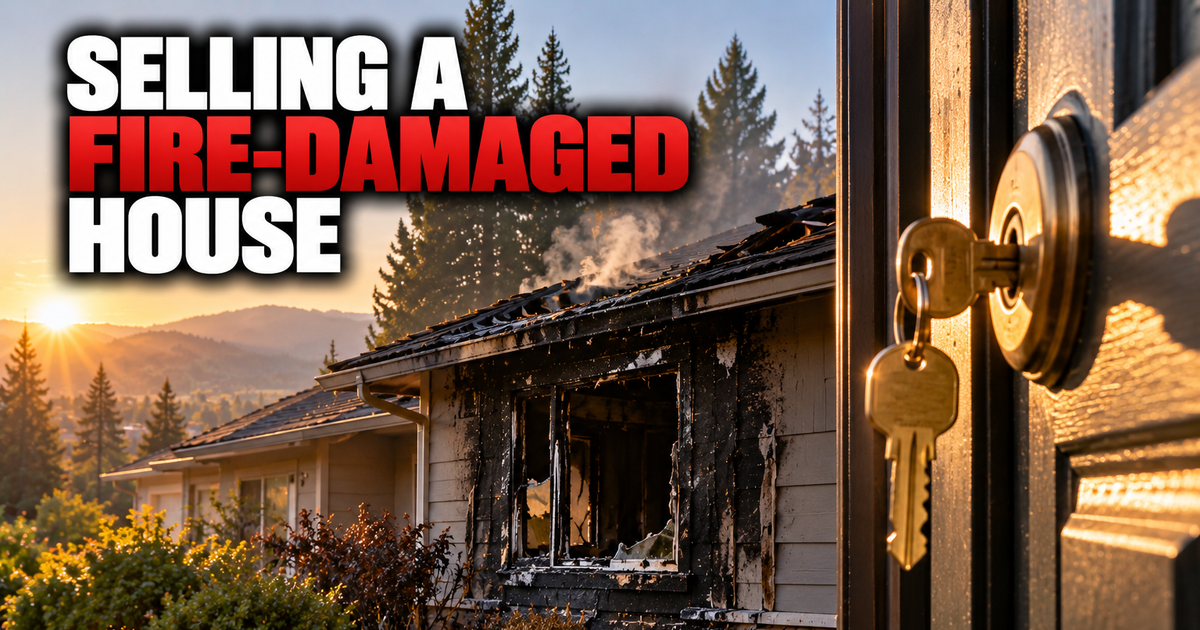
Short answer: yes, you can sell your fire-damaged house in Oregon as-is, without fixing anything. But expect it to be priced like a full gut plus remediation, often $130 a square foot or more in Portland, and disclose the fire. It’s rarely a couple of boards and some paint. Once the walls are open, it usually needs a lot more.
Six days before we were supposed to close on a house I had under contract, it caught fire. The seller had no insurance. There was no policy to pay for the damage, the house wasn’t the house we’d agreed to buy anymore, and the deal died.
In Oregon, that outcome is the default. Under ORS 93.290, if a house is destroyed, or a material part of it is, before the buyer gets title or possession, and it wasn’t the buyer’s fault, the seller can’t force the sale and the buyer gets back any money paid. That’s true unless the contract says otherwise, so read yours.
If you own a fire-damaged house right now, or you need to sell a house after a fire, here’s how buyers like me look at it.
Fire damage is never just the room that burned. When I run numbers on a fire-damaged house, a full gut is only part of it. Before anyone can rebuild, the house needs fire damage remediation: getting the water, mold, soot and smoke out and making the structure safe. Here’s what that covers:
That’s why I base the numbers on a full gut plus remediation. Remediation means tearing out the burned and wet material, drying the house out, treating any mold, and cleaning soot out of the framing and ductwork, then sealing it so the smoke smell doesn’t come back through the new drywall. Only then does the rebuild start: structural repairs, new wiring, insulation, drywall and finishes. A buyer who prices it like a normal full gut skips the first job, and the first job is where most of the surprises are.
Here’s how I build the number on a fire-damaged house, per square foot:
Add those up and remediation runs anywhere from about $10 to $40 a square foot across the whole house, depending on how wet it got and how much of it has mold. I budget $30, and more if the house sat wet through an Oregon rainy season. Tearing out drywall and insulation is already part of the gut, so I don’t count it twice. Remediation is the extra: the drying, the mold treatment, and cleaning and sealing the soot.
So on a 1,500-square-foot fire-damaged house in Portland, my rehab number starts around $195,000: $150,000 for the full gut and $45,000 for remediation.
For comparison, Angi’s 2026 cost data puts the average fire damage restoration job around $27,500, with a typical range of about $3,000 to $52,000, and major structural fires running as high as $180,000. Those are restoration jobs, often on smaller fires. Once the walls have to come open, the gut is the bigger number. A buyer who prices only the visible damage is the one who gets surprised, and then comes back to you asking for a lower price.
A cash buyer starts from what the house would sell for fully fixed, then subtracts the remediation and full gut rehab, the time it takes, the costs to buy and resell, and a profit. Here’s an example for that same 1,500-square-foot Portland house. These are example numbers, not an offer:
That leaves a cash offer around $185,000. If that number feels low, it’s because the rehab is big, not because the buyer is guessing. Ask any buyer to walk you through their math. I’ll show you mine.
If you’re required to fill out Oregon’s seller property disclosure statement, it asks directly whether there’s any material damage to the property or structures from fire (ORS 105.464). Even when the form doesn’t apply, be upfront. Fire damage shows up the minute someone looks in the attic or pulls an outlet cover, and hiding it is how deals fall apart and lawsuits start.
Wildfire is part of owning a house from Lane County south. The 2020 Almeda Fire destroyed about 2,800 structures across Talent, Phoenix and parts of Medford and Ashland, and the Holiday Farm Fire destroyed at least 500 homes and most of Blue River up the McKenzie.
Even houses that didn’t burn can carry smoke damage, and the same rule applies: price it like the walls have to come open. If you’re selling a fire-damaged or smoke-damaged house in Medford, Ashland, Eugene or anywhere in Lane County, we’ll look at it. More on that market in our Medford housing market post.
We buy fire-damaged homes, smoke-damaged houses and burned property across Oregon, as-is. You don’t clean it out, board it up or fix anything. I’m a real estate investor and cash home buyer, and I’m also a registered Oregon residential property wholesaler, #201264508. Before you sign with any buyer, including us, here’s how to check whether cash home buyers in Oregon are legitimate. If you want to compare a cash offer to listing, read cash offer vs. listing. Call and ask for Gerren at (541) 250-3067.
Can I sell a fire-damaged house as-is in Oregon? Yes. Cash buyers and investors buy fire-damaged houses as-is. You don’t need to repair, clean out or remove debris first.
Who buys fire-damaged houses? Mostly cash buyers, investors and rehabbers. Most mortgage lenders won’t finance a house that isn’t livable, so regular buyers usually can’t.
How much less is a fire-damaged house worth? It depends on the damage, but buyers price it like a full gut renovation plus remediation, which in Portland often means $130 a square foot or more. Start with what it would be worth fixed up and subtract the full rehab, the holding and selling costs, and a profit.
How much does fire damage remediation cost per square foot? Smoke and soot restoration runs about $4.25 to $6.50 a square foot, water drying about $3.30 to $7.50, and mold remediation $10 to $25 on the areas that have mold. On a whole house, that’s often $10 to $40 a square foot on top of a full gut.
Do I have to disclose a past fire when I sell my house in Oregon? If you’re filling out Oregon’s seller disclosure statement, yes. It asks about material damage from fire. Disclose it either way.
What happens if my house burns down before closing? Under ORS 93.290, if the house is destroyed or materially damaged before the buyer gets title or possession, and it wasn’t the buyer’s fault, the seller can’t enforce the contract and the buyer gets any money paid back, unless the contract says otherwise.
Can I sell a house with smoke damage but no fire? Yes. Smoke damage still gets priced seriously, because smoke gets into drywall, insulation and ductwork.
Can I sell my fire-damaged house if I still owe on the mortgage? Yes. The mortgage gets paid off at closing from the sale, like any other sale. If there’s an insurance claim, the check is often made out to you and your lender together, so loop the lender in early and decide before closing who gets the claim money.
How fast can I sell a fire-damaged house for cash? Often in a couple of weeks once title is clear. If there’s an insurance claim, sort out who gets the claim money before closing.
General information, not legal advice. Talk to a real estate attorney about your situation, especially if there’s an insurance claim or a contract already in place.
