Starting April 28, 2027, Eugene sellers need a Home Energy Score before listing. What it costs, who’s exempt, and your options if you’re selling an older Eugene home.
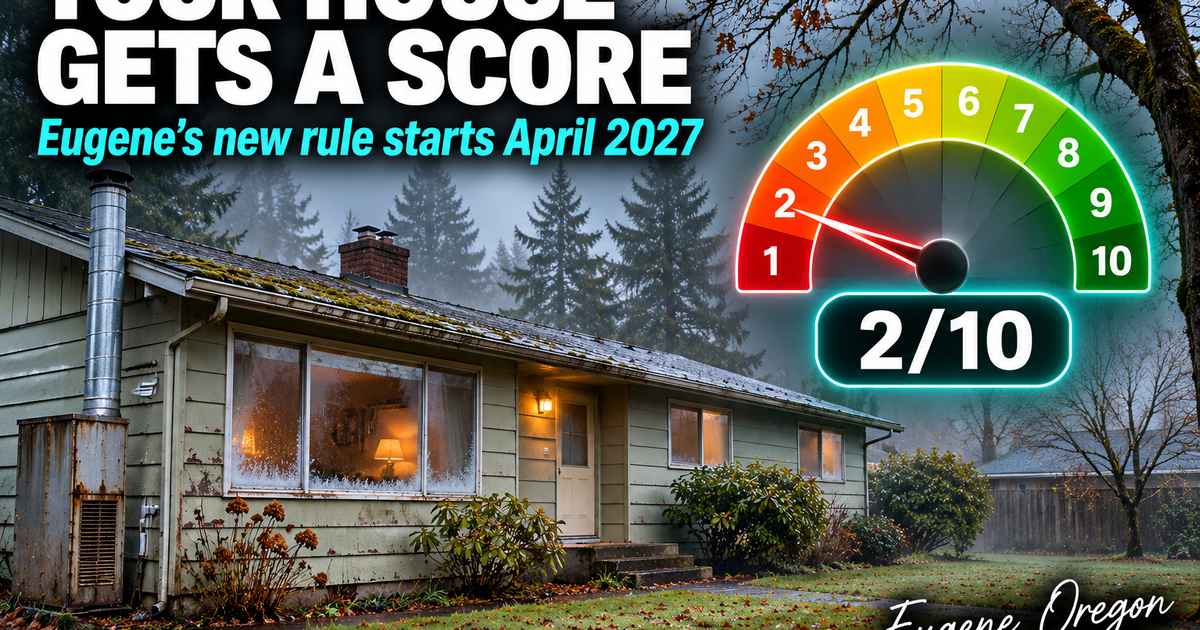
Eugene just changed the rules for selling a house.
On October 28, 2026, the Eugene City Council voted 6–1 to require a Home Energy Score before a home goes on the market. Starting April 28, 2027, Eugene sellers have to get their house scored by a certified assessor and put that score in every listing.
If you own an older home in Eugene, this matters. Here’s what the Eugene home energy score requirement actually says, what it costs, who’s exempt, and what your options are.
The short answer: Starting April 28, 2027, you’ll need a Home Energy Score to list a house for sale inside Eugene city limits. It costs about $150–$250, takes about an hour, and the score (1 to 10) goes in your listing for every buyer to see. You don’t have to make any upgrades. Foreclosure-type sales are exempt, and the city is still writing the final rules.
A Home Energy Score rates how energy efficient a house is on a scale of 1 to 10, where 10 is the most efficient.
A certified assessor walks the home and looks at:
The report estimates your home’s average energy costs and lists recommended upgrades, along with local, state and federal incentives that could help pay for them.
Here’s what the score means, according to the U.S. Department of Energy, which runs the scoring system:
The report also shows a “score with improvements,” meaning where the house would land if the recommended fixes were made. A sample report published by the City of Hillsboro shows how it reads: a house scoring a 6 today and a 9 with priority improvements, about $1,257 a year in total energy costs, and a short list of fixes like attic insulation, air sealing and duct sealing.
According to Lookout Eugene-Springfield, once the rule starts, Eugene sellers must:
The score is good for eight years, or until you make energy improvements or change the square footage, whichever comes first.
The city estimates a Home Energy Score in Eugene will cost $150 to $250 and take about an hour. The seller pays.
The city is also setting up help for lower-income sellers. City staff said the program will likely cover the assessment for sellers earning up to 80% of area median income, about $55,000 for one person or $78,700 for a household of four. That program isn’t final, and it depends on available funding.
One thing to plan around: there were only four certified assessors serving the Eugene area when the rule passed, and the city expects to train 10 to 15 more. If you plan to list in spring 2027, book early.
The ordinance includes seven exemptions. The ones reported so far:
The full list, and the enforcement penalties, will come in the city’s administrative rules, which aren’t written yet. Even the exact start date varies by report: Lookout Eugene-Springfield and the Daily Emerald say April 28, 2027, while KEZI says April 29. Either way, plan on late April 2027.
It’s also a City of Eugene rule. Springfield, Cottage Grove and the rest of Lane County aren’t covered. Neither are properties with a Eugene mailing address that sit outside city limits, so check where your property actually is.
About 65% of Eugene homes were built before 1990, according to City of Eugene figures reported by KVAL. Original single-pane windows, thin attic insulation and an old furnace all pull a score down.
Picture the listing: a 1970s ranch with a 2 out of 10 printed right next to the price.
Every buyer sees it. Every buyer’s agent uses it. It becomes one more reason to offer less, or to ask you to pay for upgrades.
And in today’s Eugene housing market, where homes are already sitting longer and buyers are negotiating harder, a low score hands them one more bargaining chip.
That’s the concern local agents raised. A Keller Williams agent told KVAL the lower-priced homes will be affected the most, and that pushing a house to a top score could cost tens of thousands of dollars. Supporters on the council say it gives buyers better information with little effect on price. Both can be true: the score is information, and buyers will negotiate with it.
My take: this rule is a good thing, and it’s long overdue.
I walk through a lot of older houses across Eugene and Springfield. Here’s what I see over and over:
Most sellers don’t know any of this is a problem until a buyer or an inspector points it out. Right now, buyers end up educating sellers in the middle of a negotiation. A Home Energy Score puts it on paper up front, so everyone starts from the same information.
That’s better for sellers, too. Knowing your score before you list lets you decide whether to fix the big items, price around them or sell the house as-is, instead of getting blindsided after an inspection.
Springfield isn’t covered by Eugene’s rule, but it has the same kind of older houses, so the same problems show up when those homes sell.
1. Sell before April 28, 2027. The requirement doesn’t start until then. Right now, no score is required to sell a house in Eugene.
2. List and disclose the score. Get the assessment, list the home, and price it knowing buyers will see the score.
3. Make upgrades first. The report lists improvements and incentives. Upgrades aren’t required, and big ones like windows or a new heating system cost real money before you see any of it back.
4. Sell as-is, directly. The rule is written around listing a home for sale. Whether a direct sale that’s never listed needs a score will be spelled out in the city’s final rules, so check before you count on it. A direct sale to a cash home buyer in Eugene also means no repairs, no showings and no inspection renegotiation.
If you’re weighing a repair-heavy house, start with our guide to selling a house that needs major repairs in Oregon.
If your score comes back low, here’s roughly what the usual fixes cost nationally, according to HomeGuide’s cost guides:
Eugene homeowners can get some of that back. EWEB, Eugene’s electric utility, currently lists:
One thing that’s gone: the federal energy-efficient home improvement tax credit. The IRS says it isn’t allowed for improvements placed in service after December 31, 2025. Income-qualified homeowners can get larger EWEB rebates, and programs change often, so check with EWEB before you start any work.
Eugene is the fifth Oregon city with a home energy score requirement, joining:
According to the Sierra Club, nearly 1 in 4 Oregonians now live where a policy like this applies.
Portland has required Home Energy Scores since January 1, 2018, so it’s the best preview of what Eugene sellers can expect.
Do I need a home energy score to sell my house in Eugene? Starting April 28, 2027, yes, if the home is inside Eugene city limits and you’re listing it for sale. Foreclosure-type sales (trustee’s sale, deed in lieu, short sale) are exempt, and the city is still finalizing the rest of the rules.
How much does a home energy score cost in Eugene? The city estimates $150 to $250, and the assessment takes about an hour. A low-income assistance program is being set up.
When does Eugene’s home energy score requirement start? April 28, 2027.
Do I have to make upgrades if my home energy score is low? No. Getting the score is required. Improving it isn’t.
Are there rebates for energy upgrades in Eugene? Yes. EWEB offers rebates and 0% loans for heat pumps, heat pump water heaters, insulation and windows, and Energy Trust of Oregon offers insulation incentives for homes heated with NW Natural gas. The federal energy-efficient home improvement tax credit ended for improvements placed in service after December 31, 2025.
Is Eugene’s home energy score requirement good for sellers? It adds a cost of about $150 to $250 and puts your score in front of every buyer. But it also means no surprises. You’ll know about drafty windows, missing insulation or an old furnace before you list, and you can decide whether to fix them, price around them or sell as-is.
Does the home energy score apply in Springfield? No. It’s a City of Eugene rule. Springfield and the rest of Lane County aren’t covered.
Which Oregon cities require a home energy score? Portland, Milwaukie, Hillsboro, Bend, and now Eugene.
Can I sell my house as-is in Eugene without a score? Before April 28, 2027, yes, since no score is required yet. After that, it depends on whether your sale is exempt and on the final rules for sales that are never listed.
